How Dopamine Fuels Goal-Driven Behavior
9 September 2026
You have probably heard the myth by now. Dopamine is the pleasure chemical. Eat a donut, get a hit. Win a game, get a hit. Check your phone, get a hit. That story is comforting because it is simple, but it is also wrong in a way that matters.
Dopamine is not about pleasure. It is about wanting. It is about prediction, effort, and the gap between where you are and where your brain thinks you should be. If you want to understand why you can binge an entire series but cannot start a single load of laundry, you need to understand dopamine as the fuel for goal-driven behavior, not as a reward for finishing.
Let me walk you through what is actually happening in your skull, why your brain is wired the way it is, and how you can stop fighting your own chemistry and start using it.
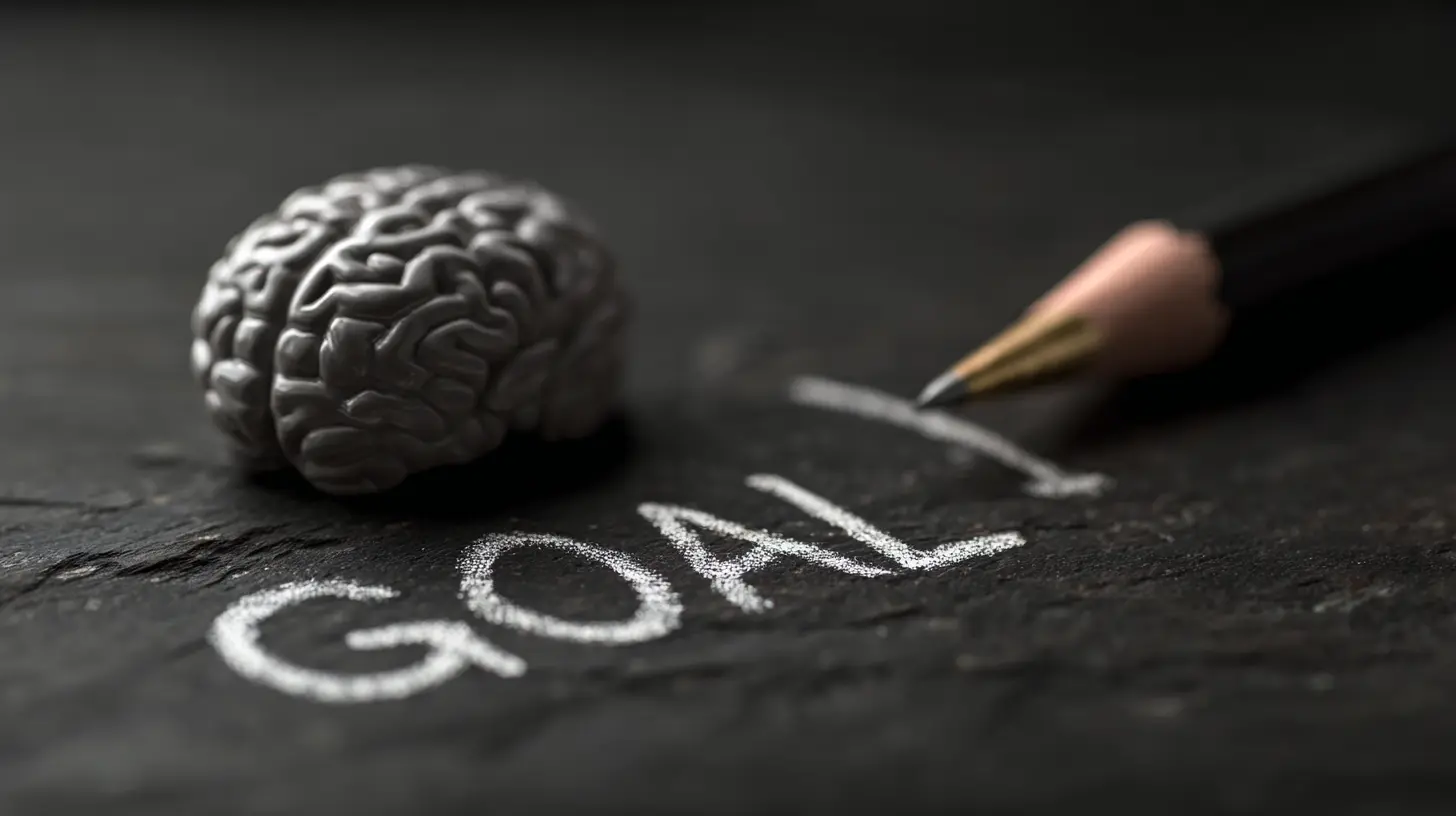
The Big Misunderstanding: Dopamine Is Not the Happy Chemical
Here is a quick thought experiment. You are hungry. You smell pizza. Your mouth waters. You feel a pull toward the kitchen. That pull, that surge of anticipation, is dopamine. Now you eat the pizza. It tastes great. But the dopamine spike happened before the first bite, not after the tenth one.The same thing happens with a notification. Your phone buzzes. You feel a flicker of excitement before you even look. That is dopamine. The actual content of the notification is often disappointing. A weather alert. A group chat message about someone's cat. But the anticipation felt good, so you keep checking.
If dopamine were the pleasure chemical, you would feel a massive wave of joy every time you finished a task. But you do not. You feel relief at best, and often nothing at all. The pleasure, if it comes, is brief. The wanting, however, is relentless.
This distinction matters because it changes how you approach goals. If you think dopamine is the reward for achievement, you will keep waiting for motivation to strike after you finish something. That never works. Dopamine is the fuel that gets you moving in the first place. It is the engine, not the destination.

The Prediction Error: Why Your Brain Cares About the Gap
Your brain is not a passive receiver of rewards. It is a prediction machine. Every second, it runs simulations about what is going to happen next. When reality matches the prediction, dopamine stays flat. When reality is better than expected, dopamine spikes. When reality is worse than expected, dopamine drops below baseline.This is called reward prediction error, and it explains a lot of confusing behavior.
Consider gambling. A slot machine pays out randomly. Your brain cannot predict when the reward will come, so every pull of the lever has the potential to exceed expectations. That unpredictability keeps dopamine firing because the brain is always on the edge of a positive prediction error. This is why variable rewards are so powerful, and why checking your email feels more compelling than reading a book you already know is good.
Now apply this to goals. If you set a goal that is too easy, there is no prediction error. You know you will finish, so there is no dopamine surge. If you set a goal that is impossible, the prediction error is negative. Your brain sees failure coming and cuts dopamine production. You feel flat, unmotivated, and convinced that you are lazy.
The sweet spot is a goal that is just beyond your current ability. The outcome is uncertain enough to generate anticipation, but not so uncertain that your brain writes it off as a loss. This is why setting slightly uncomfortable but achievable goals feels strangely motivating. Your brain is literally feeding you a chemical reward for the possibility of success.
The Effort Paradox: Dopamine Does Not Come Before Action
Here is a trap that catches almost everyone. You wait to feel motivated before you start working. You think that once the dopamine arrives, you will be able to focus. But dopamine is not a prerequisite for action. It is a response to action.Let me explain the effort paradox. When you are sitting still, your brain has no reason to release dopamine. There is no goal in sight, no prediction to update. But the moment you take one small step, even a clumsy one, your brain starts to anticipate where that step might lead. That anticipation produces dopamine. The dopamine then makes the next step easier.
This is why the hardest part of any task is the first five minutes. It is not because the task itself is hard. It is because your brain has not yet committed to the prediction that you are actually going to do it. Once you start, even badly, the prediction error shifts. Your brain says, oh, we are doing this now, and it releases the chemical that keeps you going.
I see this with writers all the time. They sit down to write a report and stare at a blank screen. They feel nothing. No inspiration, no drive. So they wait. An hour passes. They feel worse. The truth is that the first sentence, even if it is terrible, is the key. Typing that terrible sentence tells your brain that this is happening. The dopamine follows the action, not the other way around.
How Dopamine Drives Long-Term Goals Without Burning You Out
Short-term goals are easy to understand. You want a cookie, you reach for it, dopamine spikes when you get it. But long-term goals, like building a business or losing thirty pounds, have a problem. The reward is months away. Your brain is terrible at predicting rewards that far into the future, so it stops releasing dopamine.This is why so many people quit after the first week of a new habit. The initial excitement fades because the novelty wears off. Your brain has updated its prediction. It knows you will go to the gym on Tuesday. There is no surprise, so there is no dopamine. You feel bored, and boredom feels like failure.
The solution is not to grit your teeth and push through. That works temporarily, but it drains your willpower. The better approach is to create artificial prediction errors within the longer timeline.
Here is what I mean. Break your long-term goal into chunks that are small enough to feel uncertain. Instead of saying, I want to write a book, say, I want to write one terrible page tonight. The page will probably be bad. But the act of completing it creates a small positive prediction error because your brain did not fully believe you would do it.
You can also introduce variability. Change your environment. Write in a different room. Run a different route. Your brain craves novelty because novel situations have uncertain outcomes. That uncertainty fuels dopamine, which fuels persistence.
Another method is to track progress visibly. Every time you check off a box on a habit tracker, you are giving your brain a small, predictable reward. The key is to track the behavior, not the outcome. Checking off, went for a walk, is more effective than checking off, lost two pounds, because the behavior is under your control. The outcome is not.
The Dark Side: Why Dopamine Hijacks Your Goals
Dopamine is not your friend. It is a tool, and tools can be used poorly. The same system that helps you chase a meaningful goal can be hijacked by cheap, artificial stimuli that give you the feeling of progress without any actual progress.Social media is the perfect example. Every scroll, every like, every comment is a tiny variable reward. Your brain cannot predict when the next interesting post will appear, so it keeps scrolling. This produces a steady stream of dopamine with almost zero effort. The problem is that this depletes your sensitivity to dopamine over time.
Think of your dopamine receptors like a volume dial. Constant high-volume stimulation from your phone, from junk food, from binge-watching, turns the dial down. Your brain protects itself from overstimulation by reducing receptor sensitivity. Now you need even more stimulation to feel the same level of motivation. Meanwhile, real goals, which produce smaller, more spaced-out dopamine responses, feel unbearably dull.
This is why people say they cannot focus on work but can play video games for six hours. The video game is providing a supernormal stimulus. It is engineered to keep dopamine firing at maximum levels. Real work, by comparison, is a slow drip. Your desensitized brain does not even register it.
The fix is not to eliminate all dopamine-rich activities. That is unrealistic and frankly miserable. The fix is to create a dopamine budget. Treat your attention and your motivation as finite resources. If you spend four hours on social media, do not be surprised when you have no drive left for your actual goals. You have spent the fuel.
The Role of Stress and the Cortisol Connection
Dopamine does not work alone. It interacts with stress hormones, especially cortisol. This interaction is often ignored in popular discussions, but it is crucial for understanding why you sometimes feel motivated and sometimes feel paralyzed.When you face a challenge, your brain releases both dopamine and cortisol. Dopamine gives you the drive to act. Cortisol gives you the energy to deal with the stress. In healthy doses, these two chemicals work together. You feel alert, focused, and ready.
But there is a tipping point. When the challenge feels too big, cortisol spikes while dopamine drops. This is the freeze response. You do not feel motivated. You feel anxious. You might even feel physically heavy, like you cannot move. This is not laziness. This is your stress response overriding your approach system.
This explains why some people procrastinate on important tasks. The task is not boring. It is threatening. The threat of failure, of judgment, of not being good enough, triggers a cortisol surge. Your brain decides that the cost of acting is too high and shuts down the dopamine system.
If this sounds like you, the answer is not to push harder. Pushing harder increases cortisol. The answer is to reduce the perceived threat. Break the task down until it no longer feels dangerous. Instead of, I need to finish this presentation, say, I need to open the slide deck and write one bullet point. That is not threatening. Your cortisol drops. Your dopamine can come back online.
Practical Strategies: How to Hack Your Dopamine System for Real Goals
Let me give you concrete tactics that work, not just theory. These are based on how the system actually operates, not on wishful thinking.First, use the ten minute rule. Tell yourself you will only do the task for ten minutes. Set a timer. When the timer goes off, you can stop. What usually happens is that after ten minutes, you are in flow. The dopamine is flowing because your brain has committed to the task. Stopping feels harder than continuing. But the ten minute commitment lowers the barrier to starting.
Second, separate planning from doing. Planning a task feels productive, but it does not produce the same dopamine response as executing. Planning is safe. Doing is risky. Your brain knows the difference. If you spend an hour making a perfect to-do list, you are avoiding the real work. Make the list short, then execute immediately.
Third, create a finish line. Open-ended tasks are dopamine killers because there is no clear prediction. If you say, I will work on this project until it is done, your brain has no idea when the reward will come. Instead, say, I will work on this for two hours, then I will stop. The end point gives your brain a target to anticipate.
Fourth, use the dopamine of social connection. Working with other people, even virtually, changes the dynamics. You feel accountable, which raises the stakes. The possibility of letting someone down creates a mild stress response that can actually boost dopamine. This is why group fitness classes work for some people. The social element makes the effort feel more meaningful.
Fifth, be careful with reward substitution. If you constantly reward yourself with junk food or screen time for completing tasks, you are training your brain to value the reward more than the task. Over time, the task becomes a painful prerequisite for the real pleasure. This is a common mistake. The goal is to make the task itself feel rewarding, not to turn it into a toll booth.
Common Mistakes That Kill Your Motivation
Let me point out some errors that people make over and over again. These are not subtle. They are fundamental misunderstandings of how dopamine works.Mistake one is waiting for inspiration. Inspiration is not a prerequisite. It is a side effect. You do not wait for the wave to surf. You paddle out and catch it. The same applies to motivation. Act first, and the feeling will follow.
Mistake two is relying on willpower. Willpower is a limited resource that depletes over the course of the day. Dopamine, when used correctly, is renewable. If you are constantly forcing yourself to do things, you are fighting your brain instead of working with it. The better approach is to structure your environment so that the right action is the easiest action.
Mistake three is setting outcome goals instead of process goals. Outcome goals, like losing twenty pounds, are too far away to generate consistent dopamine. Process goals, like walking for thirty minutes a day, are immediate and repeatable. The process is where the dopamine lives. The outcome is just a byproduct.
Mistake four is multitasking. Every time you switch tasks, your brain has to update its predictions. This causes a dopamine dip. You feel restless and distracted. The solution is monotasking. Do one thing until it is done or until your time is up. This gives your brain a clear prediction to work with.
Mistake five is ignoring sleep. Sleep deprivation reduces dopamine receptor sensitivity. You need more stimulation to feel normal. This is why tired people reach for their phones, junk food, and caffeine. They are trying to compensate for a chemical deficit. The real fix is sleep.
When Dopamine Is Not the Problem
Sometimes the issue is not dopamine at all. If you have persistent anhedonia, the inability to feel pleasure or motivation, you might be dealing with depression, thyroid issues, or other medical conditions. Dopamine talk is popular, but it is not a substitute for medical advice.If you have tried all the strategies and nothing works, if you feel flat for weeks at a time, if you have lost interest in things you used to love, talk to a professional. There is no shame in that. The brain is an organ, and organs sometimes need help.
Also, be aware that everyone has a different baseline. Some people are naturally more driven than others. This is partly genetic. Do not compare your internal experience to someone else's highlight reel. Your dopamine system is calibrated for your life, not theirs.
The Big Picture: Dopamine as a Navigation System
Think of dopamine less like a reward and more like a compass. It points you toward things that your brain predicts will be valuable. It does not care about the value itself. It cares about the prediction. This is why you can get a dopamine hit from a notification that turns out to be spam. The prediction was wrong, but the chemical response was real.This understanding is liberating. It means you are not at the mercy of your feelings. You can train your prediction system. Every time you complete a small goal, you are teaching your brain that effort leads to positive outcomes. Over time, your brain becomes more optimistic about effort. It releases dopamine earlier and earlier in the process. Eventually, the anticipation of working becomes rewarding in itself.
This is what people mean when they say they love their work. They are not saying every moment is pleasurable. They are saying that their brain has learned to associate the work with positive prediction. The work itself is the reward because the brain has been trained to expect good things from it.
You can do the same thing. Start small. Pick one goal, any goal, and break it down until it is laughably easy. Then do it. Then do it again tomorrow. Your brain will start to catch on. It will begin to release dopamine not just when you finish, but when you begin. That is the moment you stop needing motivation and start having momentum.
And that, honestly, is the whole game. Not to feel pleasure all the time, but to build a system where the effort itself feels like the reward. The dopamine is just the messenger. The real power is in what you choose to point it at.
all images in this post were generated using AI tools
Category:
Goal Setting PsychologyAuthor:

Paulina Sanders
Discussion
rate this article
1 comments
Coral Erickson
Dopamine isn't just a buzzword; it's the fuel that drives ambition. Understanding its role in behavior can unlock your potential. If you're not tapping into this powerful neurotransmitter, you're missing out. Use this knowledge to ignite your passion and chase your goals with relentless energy.
September 18, 2026 at 3:13 AM