The Connection Between Mental Illness and Creativity
30 May 2026
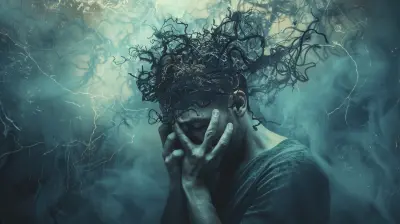
Ever noticed how some of the most brilliant artists, writers, and musicians have also struggled with mental health issues? It’s almost like genius and madness go hand in hand. But why is that? Is there really a link between mental illness and creativity, or are we just romanticizing the tortured artist trope?
This isn’t just about Van Gogh cutting off his ear or Sylvia Plath’s tragic end. The connection between mental health and creativity is far more intricate—and honestly, a little mysterious. So grab a coffee, settle in, and let’s dive deep into one of psychology’s most captivating enigmas.
The Fine Line Between Madness and Genius
There’s this idea floating around—a cultural myth, really—that creativity and mental illness are somehow bound together. You’ve heard it before: “You have to be a little crazy to be that brilliant.” But is there any science behind this?Well… yes, kind of.
Numerous studies have examined the psychological profiles of people in creative professions—writers, musicians, painters, inventors—and found higher rates of mood disorders, particularly bipolar disorder and depression. But hold up. That doesn't mean being creative causes mental illness or vice versa.
It’s more like they’re dance partners, swirling around in the same emotional ballroom.
A Look at the Evidence
Let’s get a little nerdy for a second.One of the most cited studies in this field is by psychologist Kay Redfield Jamison. She’s not only an expert on bipolar disorder; she also lives with it herself. Her research found that individuals in creative fields were significantly more likely to suffer from mood disorders—especially bipolar disorder.
Another study by Nancy Andreasen, which focused on writers at the University of Iowa Writers' Workshop, found that 80% had experienced at least one episode of depression, hypomania, or mania in their lifetimes.
That's not a tiny number. That’s huge.
But we still have to be cautious. Correlation does not equal causation. Just because lots of creative folks have mental health struggles doesn’t mean the two are directly linked in every case.
What’s Actually Going On in the Brain?
Let’s talk brains—without turning this into a neuroscience lecture, promise.People with certain mental illnesses, especially bipolar disorder and schizophrenia, often experience something called divergent thinking. This is the ability to think outside the box, come up with novel ideas, and make connections that most people wouldn’t consider.
Sound familiar? That’s basically the definition of creativity.
During manic or hypomanic states, individuals may feel a surge of energy, inspiration, and confidence. They might work for days without sleep, pouring their minds onto canvas, paper, or into a melody. But the crash that follows is brutal—lethargy, self-doubt, and deep depression.
It’s like flying too close to the sun, only to plummet back to earth.
On a neurological level, some researchers believe that reduced “latent inhibition” in the brain may play a role. This means the brain isn’t as good at filtering out irrelevant stimuli. That sounds like a bad thing, but it can actually allow for unexpected connections—like seeing patterns in chaos.
Artists see beauty in randomness. Maybe it’s because their brains are wired to find meaning where others see noise.
But Wait—Not All Creative People Are Mentally Ill
This is super important: You don’t have to suffer to be creative.There are plenty of highly creative people who live stable, mentally healthy lives. And guess what? They’re just as talented and brilliant. The danger here is in glorifying mental illness as a “price” for creativity—as if being tormented is a requirement for greatness.
It’s not.
Struggling with mental health does not make someone more “authentic” as an artist or a thinker. Pain might inspire, but it also breaks.
Why Do We Romanticize the “Tortured Artist”?
Let’s be real for a second.There’s something almost seductive about the image of the lonely writer, staring out a rain-soaked window, sipping whiskey, and pouring heartache into every word. Or the manic painter, flinging colors onto canvas in a feverish trance.
It’s dramatic. It’s cinematic. It’s… kind of a lie?
The media and pop culture have reinforced this stereotype for decades. Think of movies, books, and documentaries that portray creative geniuses as unstable, volatile, or tragic. They make for good stories, but they often gloss over the brutal realities of mental illness.
It’s not pretty. It’s isolating, exhausting, and sometimes deadly.
By romanticizing the tortured artist, we risk discouraging people from seeking help. Because if they get better, will they lose their “spark”? (Spoiler: No, they won’t.)
Could Mental Illness Actually Fuel Creativity?
This is the million-dollar question.The short answer? Maybe. But not in the way you think.
Certain aspects of mental illness—especially the emotional intensity and altered states of perception—can contribute to a creative process. For instance:
- Depression often brings a deep sense of introspection. It forces people to confront raw, uncomfortable emotions. Many poets, lyricists, and fiction writers channel this into their work.
- Hypomania (associated with bipolar disorder) can bring bursts of energy and ideas. It's like your brain’s on fire—in a good way, briefly.
- Schizophrenia and related disorders may involve altered realities, which can lead to profoundly unique artistic expressions.
But here's the catch: Mental illness can also impair cognition, motivation, and functionality. Someone with severe depression may struggle to get out of bed, let alone write a masterpiece.
So if we're being honest—the moments of inspiration may be lightning flashes in otherwise stormy clouds.
Can Creativity Be a Coping Mechanism?
Absolutely. In fact, many people use creative expression as a way to make sense of their inner chaos.It's like emotional alchemy—turning pain into paintings, anxiety into poetry, trauma into theater.
Art therapy has become a legitimate form of mental health treatment. Drawing, painting, writing, dancing—it’s all an outlet. When words fail, creativity steps in. It allows a person to externalize what they’re feeling, rather than bottling it up.
Therapists often encourage journaling for people dealing with anxiety and depression, not because it’s a cure, but because it creates space between the person and their pain.
Creativity doesn’t fix everything—but it helps you process life. It’s like giving your emotions a megaphone, instead of letting them echo silently.
The Double-Edged Sword of Sensitivity
Creative individuals often score high on emotional sensitivity. They feel things deeply. Joy, grief, fear—it all hits harder.This heightened empathy can be a gift. It fuels storytelling, art, music, connection.
But it can also be a curse. Sensitivity makes you more vulnerable to burnout, overwhelm, and emotional dysregulation. That’s why some of the most insightful creative works come from those who’ve walked through emotional fire.
It’s like your heart has thinner skin—you absorb more, ache more… but also love more.
So, What’s the Verdict?
Is there a connection between mental illness and creativity? Yes. But it’s not a simple cause-and-effect relationship.Think of it like a tangled web—genetics, personality, environment, brain chemistry, trauma—all interwoven.
Some mental health conditions may open the door to creative thinking through altered perceptions and emotional depth. But they also slam other doors shut—productivity, consistency, well-being.
And let’s never forget: Creativity exists in everyone.
You don't have to be tormented to make beautiful things. You just have to feel something, process it, and express it in your own way.
Breaking the Stigma
Here’s what we need to remember moving forward:1. Mental illness is real, and it’s treatable.
Being creative doesn't mean you have to suffer in silence. Seeking help doesn’t destroy your art—it supports it.
2. Everyone’s experience is different.
Not every artist is mentally ill. Not every person with mental illness is creative. Let’s stop making blanket assumptions.
3. Support matters.
If you know someone who’s struggling, be there for them. Sometimes just knowing they’re not alone can make all the difference.
The Beauty in the Mess
Creativity and mental illness share a strange, sometimes uneasy alliance. At times, pain may birth beauty. Other times, it silences it. But both are part of what makes us deeply human.If you’ve ever written a song in the middle of heartbreak, painted through anxiety, or journaled your way out of a panic attack—you’ve already felt the power of this connection.
This isn’t about glorifying suffering, but honoring the resilience behind the brush strokes, the choruses, and the pages.
In the end, maybe creativity isn’t about escaping the darkness—it’s about learning to dance with your shadows and letting the light back in.
all images in this post were generated using AI tools
Category:
Psychiatric DisordersAuthor:
Paulina Sanders
Discussion
rate this article
1 comments
Alana McLoughlin
Who knew that the mind's quirks could be the secret sauce for creativity? It's like being able to paint masterpieces while walking a tightrope. Just remember, balancing is key... unless you prefer abstract art!
June 19, 2026 at 2:43 PM
Paulina Sanders
Absolutely! Embracing those quirks can lead to unique creations. Finding that balance is essential, but sometimes a little chaos sparks the best ideas.