Psychology says people who don't like wearing contact lenses aren't necessarily afraid, they prefer glasse
July 5, 2026 - 02:41
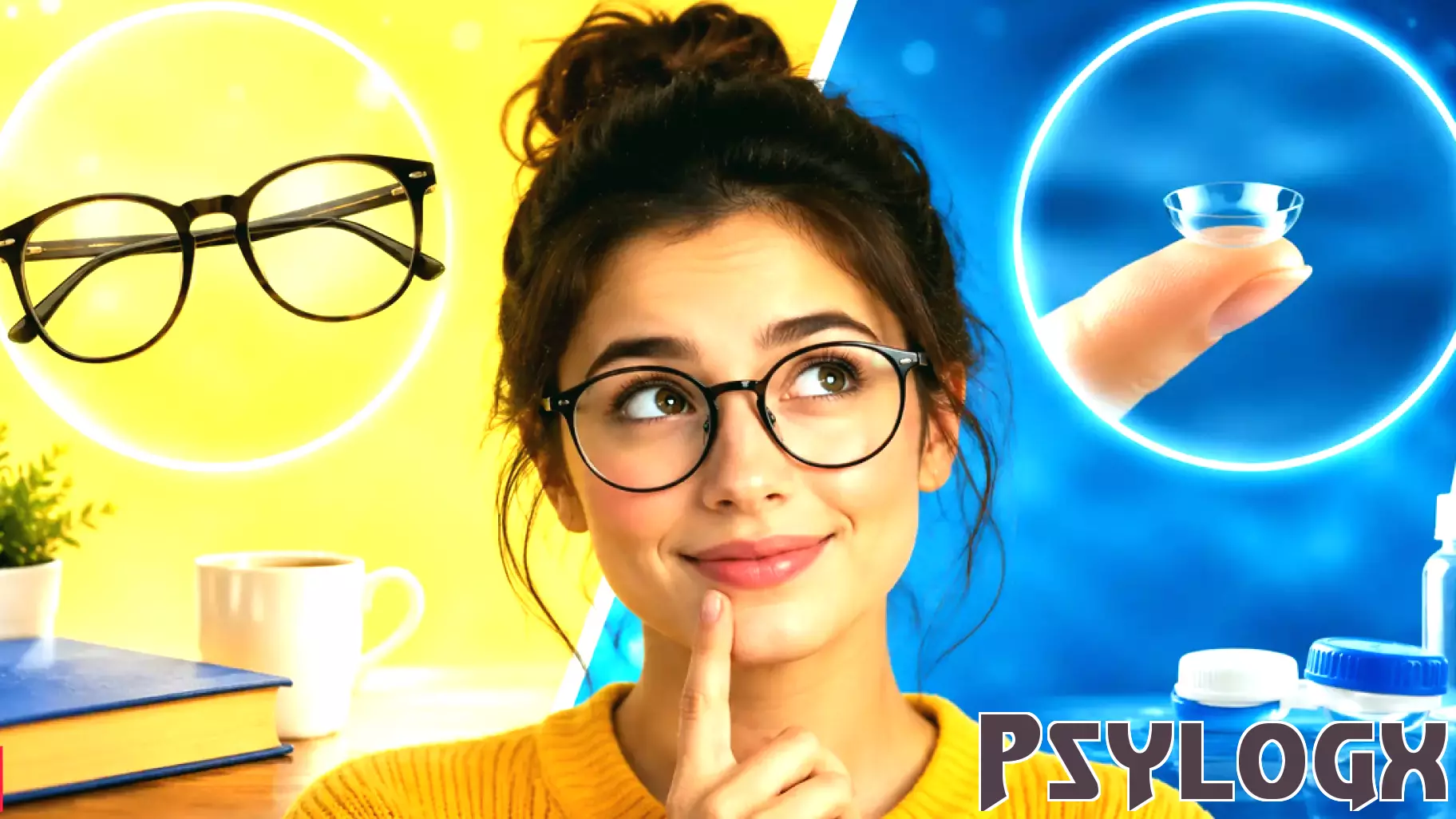
A common assumption is that people who prefer wearing glasses are simply afraid of touching their eyes. Psychology does not support such a broad conclusion. For many, the preference is shaped by comfort, familiarity, convenience, personal routine, or the greater sense of control that glasses offer in everyday life.
Researchers point out that avoiding contact lenses is rarely about phobia. Instead, it often comes down to practical factors. Glasses provide a consistent visual field without the need for daily cleaning, storage, or the risk of irritation from dry eyes or dust. The act of putting in contacts requires fine motor skill and a tolerance for foreign objects near the eye, but most people who skip them are not driven by fear. They simply find glasses more reliable.
There is also a psychological component related to identity. Glasses are visible accessories that can become part of a person's look or professional image. Contacts, being invisible, do not offer that same sense of self-expression. For some, the daily ritual of putting on glasses signals the start of the day, while removing them marks a transition to rest. This routine provides a sense of structure that contacts cannot replicate.
the choice between glasses and contacts is less about fear and more about what fits a person's lifestyle. Psychology suggests that comfort, routine, and identity often outweigh any reluctance to touch the eye.
MORE NEWS

November 17, 2026 - 15:15
Ambition and Whiskies: Insights from Vaughan OwenVaughan Owen, a notable figure in the advertising world, has been making waves with his unique approach to ambition and success. After co-founding OwenKessel in South Africa, which was acquired by...

November 16, 2026 - 21:44
Do Holiday Deals Actually Save You Money?A marketing expert at Binghamton University, State University of New York, sheds light on how retailers leverage psychological tactics to boost sales during the holiday shopping season. As Black...
November 16, 2026 - 11:09
The Normalcy of Imaginary Friends in ChildhoodWe all remember our first friends, the ones who we took everywhere with us. They were always there for us to play and chat with. A recent study highlights that about 65 percent of children have...
November 15, 2026 - 23:06
Subtle Behaviors That May Indicate a Higher Risk of AddictionYou promise yourself just one episode, yet somehow it turns into a late-night binge. A quick scroll through TikTok can turn a lazy Sunday into a marathon of videos. Even a simple trip to an online...