Psychology says people who get into a lot of fights aren't always aggressive, they may be reacting to the
July 5, 2026 - 22:43

A new look at conflict behavior challenges the common assumption that people who start or get into many fights are simply aggressive by nature. Psychology researchers now point to a more complex picture: these individuals are often reacting to deep-seated triggers rather than acting out of pure hostility. The encouraging news is that these patterns are not fixed.
Studies in behavioral psychology indicate that frequent fighting can stem from a range of underlying causes. For some, it is a learned response to past trauma or chronic stress, where the brain's threat detection system becomes hypersensitive. For others, it may be a misguided attempt to assert control or protect a fragile sense of self-worth. In these cases, the physical confrontation is not about aggression but about survival or defense.
The key insight is that these reactive patterns can be unlearned. Therapy approaches like cognitive behavioral therapy and trauma-informed care have shown success in helping individuals recognize their triggers and develop healthier coping mechanisms. This means that a person who seems perpetually ready to fight is not doomed to that behavior. With the right support, they can learn to pause, process their emotions, and choose a different response. The hope is that by understanding the root causes, we can shift from blaming the person to addressing the problem.
MORE NEWS

October 4, 2026 - 03:18
Why Meaning Matters More Than Happiness For A Fulfilling LifeHappiness is often treated as the ultimate goal. We chase it through achievements, purchases, and experiences, believing that once we catch it, everything will fall into place. But psychologists...

October 3, 2026 - 04:17
University Libraries launches Penn State Behrend student psychology journalThe Open Publishing team at the University Libraries has introduced a new academic publication called The Behrend Psychology Journal. This open access journal features original research conducted...
October 2, 2026 - 05:18
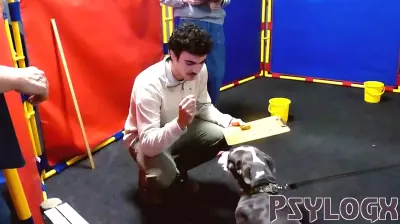
Dogs Take Part in Behavior Studies at emBARKEAU CLAIRE - At emBARK, UW-Eau Claire students were seeing if dogs, young and old, could be taught a few new tricks. The research effort brought together handlers, volunteers, and their canine...
October 1, 2026 - 20:09
Remembering Melinda Blackman: A Professor Who Shaped GenerationsMelinda Blackman, a professor of psychology whose career spanned decades of teaching and mentorship, died on July 10, 2026. Her passing has left a deep void within the Department of Psychology and...