Autism and Gender Identity: Navigating the Overlap
18 July 2026
Ever found yourself stuck in the middle of a Venn diagram, wondering what it means to live in the overlap? Well, welcome to the curious intersection of autism and gender identity—a space where self-discovery buzzes like a beehive on espresso. It's not just complex… it’s beautifully nuanced, and quite frankly, reshaping how we understand both neurodiversity and gender expression.
And if you're thinking, “Wait, do these two really connect that much?” Oh, absolutely. It’s like peanut butter and jelly—two totally different flavors, but when they meet, something magic happens (even if a little messy at times).
So buckle in! We’re diving deep into the neuro-gender galaxy, zingy facts, real-talk moments, and all.
Understanding the Basics (Spoiler: It’s Not That Basic)
What is Autism?
Autism, officially called Autism Spectrum Disorder (ASD), is a neurodevelopmental condition that affects how a person communicates, interacts, and experiences the world. Imagine your brain has its own unique operating system—it processes data differently, sometimes more intensely, sometimes more slowly, but always differently. That’s autism.Some autistic folks are super sensitive to sensory input—like those scratchy sweater tags or that buzzing light in your office driving you bonkers. Others might think in pictures rather than words. Basically, autism isn’t a one-size-fits-all gig. It’s a whole spectrum.
What is Gender Identity?
Gender identity is your inner compass—the deep sense of who you are in terms of gender. You might identify as male, female, both, neither, or somewhere in between. This identity might match your assigned sex at birth—or not. And that’s totally okay.It’s not about what clothes you wear or how you cut your hair (though those can be part of it!). Gender identity lives inside your brain and your soul.
The Overlap: Where Neurodivergence Meets Gender Diversity
Now this is where things start to really get interesting.Several studies and heaps of anecdotal experiences have shown a fascinating trend: people on the autism spectrum are more likely to identify as gender-diverse or non-cisgender (aka, not strictly male or female according to society’s old-school rules). That means more autistic folks are identifying as transgender, non-binary, genderfluid, agender… you name it.
This isn’t just some quirky coincidence—it points to something deeper.
Why is That?
Glad you asked! There are a few theories floating around:- Social Norms? Meh. Many autistic people aren’t overly concerned with what society expects of them. Gender norms? Those are often just another confusing social rule that doesn't compute. Instead of following the crowd, autistic individuals might be more likely to ask, “Why does this rule exist?” And if it doesn’t make sense? They’re not afraid to ignore it.
- Self-Identity is a Deep Dive. Autistic folks tend to spend a lot of time inside their own heads—analyzing, observing, questioning. That can actually promote deeper self-awareness, especially when it comes to things like gender identity.
- Blunt Honesty. Autistic people are often straight shooters. They say what they mean and mean what they say. If they identify as a different gender, they’re not likely to hide it just to make others comfortable.
Stats Don't Lie
Let’s toss in some numbers, shall we?- According to various studies, autistic individuals are three to six times more likely to be gender-diverse than the neurotypical population.
- In one study, nearly 8% of children referred to gender identity clinics showed traits consistent with autism—compare that to the general population where autism rates hover around 1-2%.
Coincidence? Highly unlikely.
Challenges Faced at the Crossroads
Double Whammy Struggles
Being autistic? Already challenging in a world designed for neurotypical people. Being gender-diverse? Also a rollercoaster thanks to societal bias. But being both? That’s navigating a labyrinth blindfolded with one hand tied behind your back.Misdiagnosis and Overlooked Needs
One big issue in the overlap community is misdiagnosis—or worse, no diagnosis at all. Gender-diverse autistic folks often get dismissed because doctors focus on one identity and forget the other.A gender-diverse teen might get wrongly diagnosed with anxiety because their discomfort is chalked up to "just a phase" or social awkwardness. Their autism might go unnoticed because professionals aren’t trained to see how neurodivergence and gender intersect.
The system still has a lot of catching up to do.
Sensory Issues & Body Dysphoria: A Hellish Combo
Body dysphoria—when you feel deeply uncomfortable in your physical body because it doesn't match your gender identity—is already tough. Throw in autism-related sensory issues, and it’s a minefield. Imagine hating your body and being hyper-sensitive to textures, sounds, or certain fabrics.Something simple like wearing a binder (a garment some trans masc folks use to flatten their chest) can be painful for someone with tactile sensitivity. It's like trying to wear a suit of armor made of mosquitoes. No, thank you.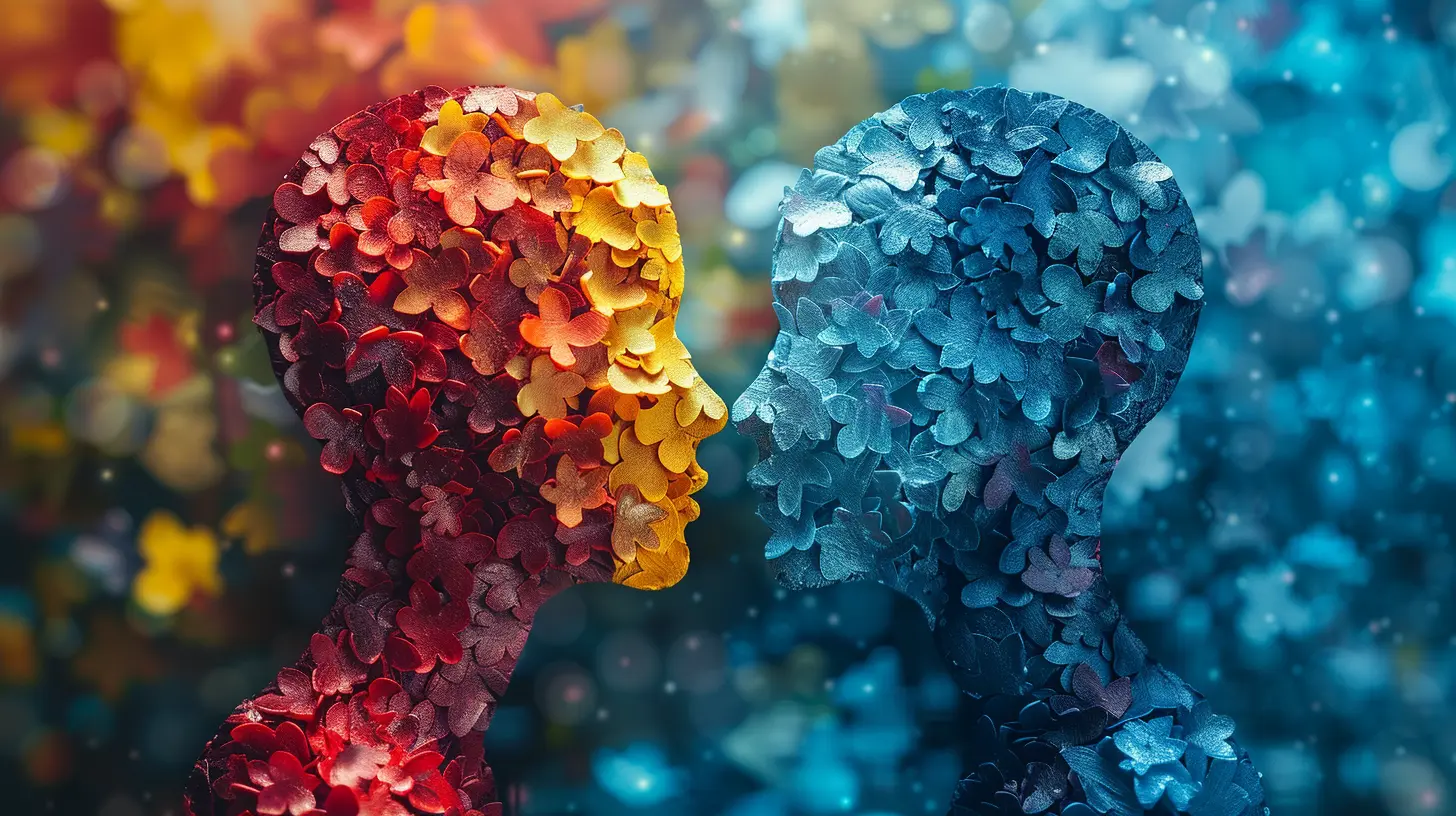
Strengths Found in the Overlap
Let’s flip the script. It’s not all struggle and storm clouds. In fact, there’s a lot of power and beauty in being both autistic and gender-diverse.Unshakable Truth-Telling Abilities
Autistic individuals often prioritize authenticity. They have a deep commitment to truth—their truth. That self-honesty can help them navigate gender identity in bold and brave ways, even when the world pushes back.Unconventional Thinking Breeds Freedom
When you don’t see the world like everyone else, you also don’t feel compelled to live by the same rules. That mindset can make space to embrace unique gender journeys more freely, without labels or constraints.Resilient as Heck
Living in two marginalized identities doesn’t make someone weaker—it often makes them more resilient. Autistic, gender-diverse folks are warriors with emotional grit, creative coping mechanisms, and a dash of magic.How to Navigate This Overlap (Without Getting Lost in the Fog)
If you or someone you love is exploring both neurodiversity and gender identity, here are some honest-to-goodness tips to help light the path.1. Find Your People
Supportive communities are gold. Whether it's an online forum, a Discord group full of trans autistics swapping memes, or a local LGBTQ+ meetup, finding people who get you is a game-changer.2. Use Neuro-Affirming, Gender-Affirming Services
Look for therapists and doctors who not only understand autism and gender identity, but respect both. You deserve someone who doesn’t treat either as a “problem to be fixed.”3. Explore at Your Own Pace
There’s no finish line to figuring out who you are. Whether you’re 13 or 43, your identity journey is valid at every twist and turn. And hey, it’s okay if that journey changes over time. You’re not a robot—you're a nuanced, ever-evolving human.4. Communicate Your Needs Clearly
It might take practice (and maybe some cue cards), but try to clearly express your preferences, boundaries, and identity. Whether it’s your pronouns or your sensory sensitivities, your needs matter.5. Ditch the One-Size-Fits-All Mentality
Gender and autism are both spectrums—places where black-and-white thinking just doesn’t work. Embrace the colors in between. Heck, make up your own color if you want. (Chartreuse sparkle, anyone?)For Parents and Allies: Here's How to Be Awesome
Maybe you're not autistic or gender-diverse yourself, but you’ve got someone in your life who is. So how can you support them without being That Person who means well but messes up big time?- Listen without judgment.
- Respect pronouns, even when you’re confused.
- Give space and patience.
- Don’t assume—it’s okay to ask with kindness.
- Celebrate their identity, not just tolerate it.
Sometimes just being there—truly being present—is more powerful than any fancy advice.
The Future of Understanding
This isn’t just a niche topic—it’s part of a growing conversation about human diversity, acceptance, and the many ways we understand ourselves. As society becomes more open to complexity (and let’s be honest, complexity is kinda beautiful), we get better at supporting every splash of the human rainbow.There are still gaps in research, healthcare, and education—but voices from the community are getting louder, and people are paying attention. More autistic folks are becoming vocal advocates for inclusive gender spaces. More gender-diverse folks are sharing their autistic pride.
The world is changing, and it’s about time.
Final Thoughts: Life in the Overlap
So what’s it like to live in the overlap of autism and gender identity?Well, it’s a little like trying to solve a Rubik’s cube while skydiving—with glitter raining from the sky.
Confusing? Sometimes.
Exhilarating? Often.
Worth understanding and respecting? Always.
Every person in this intersection has a story worth hearing—a truth worth honoring. And if you’re one of those brave souls walking this double path, know this: you are not alone. You are radiant, real, and ridiculously resilient.
all images in this post were generated using AI tools
Category:
AutismAuthor:
Paulina Sanders
Discussion
rate this article
1 comments
Amber Valentine
This article sheds light on the unique experiences of autistic individuals regarding gender identity, highlighting the importance of understanding and acceptance in personal journeys.
July 28, 2026 at 4:20 AM
Paulina Sanders
Thank you for your thoughtful comment. I'm glad the article resonates with you and emphasizes the need for understanding and acceptance.