Can Artificial Intelligence Help Diagnose Depression in 2027?
17 April 2026
Let’s be honest for a second. When you think of an AI diagnosing something, you probably picture a cold, sterile room with a robot scanning a patient, spitting out a code like something from a sci-fi movie. It feels distant, impersonal, and frankly, a bit scary. But what if I told you that by 2027, artificial intelligence might become one of the most empathetic tools in a psychologist's arsenal for spotting depression? Not as a replacement for human connection—never that—but as a powerful, perceptive ally. The question isn't just can it help, but how will it change the very landscape of mental health diagnosis? Buckle up, because we're diving into a future that's closer than you think.

The Current Landscape: Why We Need a New Lens on Depression
Right now, diagnosing depression relies heavily on a tried-and-true method: the clinical interview. You talk to a professional, you fill out questionnaires like the PHQ-9, and together, you navigate your symptoms. It’s human-centric, and that’s its strength. But it’s also fraught with hurdles.Think of it like trying to diagnose a complex engine problem just by listening to the car idle. You might hear the knock, but what about the thousand silent data points the onboard computer is logging? Human clinicians are incredible, but they’re human. They can miss subtle cues, have limited time, and operate within the constraints of a patient's self-awareness and willingness to share. Add to that massive shortages of mental health professionals and the lingering stigma that keeps people from walking into an office in the first place, and you have a system straining at the seams.
This is where AI enters, not with a wrench, but with a super-powered diagnostic scanner. By 2027, its role won't be to give a final verdict, but to illuminate shadows we can't easily see.

The AI Toolkit: Listening to the Unsaid in 2027
So, what might this actually look like in three years? Forget clunky robots. Imagine AI woven into the fabric of our digital lives, analyzing patterns with a gentle, persistent focus.The Voice of Emotion: Your smartphone already knows your face. By 2027, with explicit consent and rigorous privacy controls, its AI could analyze subtle vocal biomarkers. It’s not just what you say, but how you say it. A flattening of prosody (the musicality of speech), longer pauses, a slight slurring in articulation—these can be precursors or symptoms of depressive episodes. An AI, trained on thousands of voice samples, could detect these shifts long before you or your loved ones notice a consistent change. It’s like having a weather app for your emotional climate, sending a gentle notification: "Hey, I'm noticing a pattern. How are you really doing?"
The Digital Phenotype: Our digital exhaust—how we type, scroll, and interact—is a goldmine of behavioral data. An AI could analyze your texting patterns on secure platforms. Are your messages becoming shorter, less frequent, sent at erratic hours? Is your social media scrolling becoming passive and endless, or have you withdrawn completely? Even your gait, measured by a phone or wearable, can show the psychomotor slowing associated with depression. This isn't surveillance; think of it as a compassionate mirror, reflecting back patterns you’re too close to see.
Beyond the Questionnaire: AI could revolutionize standardized tools. Imagine an adaptive diagnostic interface that changes its questions in real-time based on your responses, diving deeper into relevant areas and skipping irrelevant ones. It’s like a detective that knows exactly which doors to knock on, making the process faster, less tedious, and potentially more accurate.

The Human in the Loop: Why AI is the Co-Pilot, Not the Captain
This is the most critical point, so I’ll shout it: AI in 2027 will not, and should not, diagnose depression alone. The "human-in-the-loop" model will be non-negotiable. AI’s role is triage, pattern recognition, and providing objective data points.Here’s the metaphor: The AI is the most attentive, data-driven nurse or assistant you can imagine. It takes vitals, notes observable symptoms, reviews the long-term logbook, and flags concerning trends. It then presents this comprehensive dossier to the human clinician—the doctor, the psychologist—who brings context, empathy, therapeutic alliance, and nuanced judgment to the table. The clinician asks the "why" behind the data. They see the tears the AI can't feel and hear the hope in a sentence the AI might flag as negative.
The diagnosis will remain a profoundly human act, but one informed by a depth of insight previously unimaginable. This partnership could reduce misdiagnosis, catch subthreshold symptoms earlier, and finally give clinicians what they desperately need: more time and better information to focus on the human part of healing.

Navigating the Minefield: Ethics, Bias, and Privacy in 2027
We can’t talk about this rosy future without staring directly at the thorny, ethical brambles in the way. The path to 2027 is littered with legitimate concerns.The Bias Problem: AI is only as good as the data it eats. If we train these systems primarily on data from certain demographics (say, white, Western, university-educated populations), they will fail catastrophically for others. They might miss cultural expressions of distress or pathologize normal behavior in different groups. By 2027, the success of diagnostic AI will hinge on building diverse, representative datasets—a monumental but essential task.
The Privacy Paradox: We’re talking about handing over our most intimate data—our voice, our keystrokes, our digital behavior. Who owns this data? Where is it stored? Could it be used by insurers or employers? Robust, transparent, and enforceable frameworks for data sovereignty and consent will need to be built from the ground up. The technology might be ready by 2027, but will our laws and ethical standards be?
The Dehumanization Fear: Will an over-reliance on AI algorithms make care feel colder? This is a real risk. The goal must be to use AI to free up human time for connection, not to replace the connection itself. It’s about augmentation, not automation.
The 2027 Reality Check: A Probable Scenario
So, let’s paint a realistic picture of a morning in, say, October 2027.You’ve opted into a wellness program through your healthcare provider. Your encrypted, anonymized data from your wearable and phone (with your ongoing consent) is analyzed by an AI. It notices a three-week trend: your voice patterns have lost variability, your nightly phone use has spiked, and your physical activity has dropped significantly—all subtle shifts you haven’t mentioned to anyone.
Instead of a cold diagnosis, you receive a secure message from your clinic’s portal: "Based on your wellness trends, a check-in is recommended. Would you like to schedule a 15-minute video consult with a nurse practitioner?" During that call, the practitioner has the AI’s trend report. They can ask you targeted, compassionate questions: "I see you've been up a lot at night. What's on your mind?" This bridges the gap from data to dialogue, leading to a faster, more supportive referral to a therapist for a full clinical assessment.
This is the likely reality—AI-powered proactive care, not automated diagnosis.
Conclusion: A Tool for Light, Not a Replacement for Warmth
By 2027, artificial intelligence will undoubtedly be helping to diagnose depression. But "helping" is the operative word. It will serve as a powerful, pervasive, and perceptive early-warning system and clinical support tool. It will shine a light on the hidden, quantitative facets of our mental state, offering a map where before we had only a compass.Yet, the heart of diagnosis—the understanding of a unique human story, the shared meaning-making, the therapeutic bond—will remain irreplaceably human. Depression is not just a data pattern; it’s a lived experience of pain. AI can help us see the contours of that pain more clearly, but it takes another human to sit with us in it, to validate it, and to guide us toward hope.
The future isn't about machines telling us we're sad. It's about using machines to ensure that no one has to be profoundly, debilitatingly sad before another human being has the chance to reach out and say, "I see you. Let's talk."
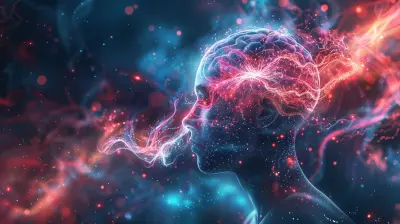
all images in this post were generated using AI tools
Category:
Depression AwarenessAuthor:

Paulina Sanders
Discussion
rate this article
2 comments
Nadine Huffman
Great insights! Excited for the future of AI!
September 6, 2026 at 4:55 PM
Paulina Sanders
Thanks! I share your excitement about AI's potential in mental health.
Brandon Mendoza
This article raises important questions about AI's role in mental health diagnosis and support.
May 5, 2026 at 4:20 AM
Paulina Sanders
I'm glad you found the article thought-provoking. The intersection of AI and mental health is indeed crucial for future advancements.