Feeling Overwhelmed? The Science Behind Taking a Pause
19 October 2026
You know the feeling. Your inbox is a hydra. Three people are waiting on you. Your brain is cycling through a mental list like a broken carousel, and somewhere in the background, a small voice is asking whether you paid the electricity bill. Your shoulders are up near your ears. Your jaw is tight. You are not thinking clearly, and you know it.
Here is the strange part: in that exact moment, the thing you most need is the thing that feels most irresponsible. You need to stop. Not forever. Not even for long. Just long enough to let your nervous system catch up with your to-do list.
Most people treat pausing as a luxury or a sign of weakness. The science says otherwise. A pause is not the opposite of productivity. It is a precondition for it. Let me walk you through why your brain falls apart under load, what actually happens when you stop, and how to pause in a way that helps instead of turning into avoidance.

What "Overwhelmed" Actually Means in Your Brain
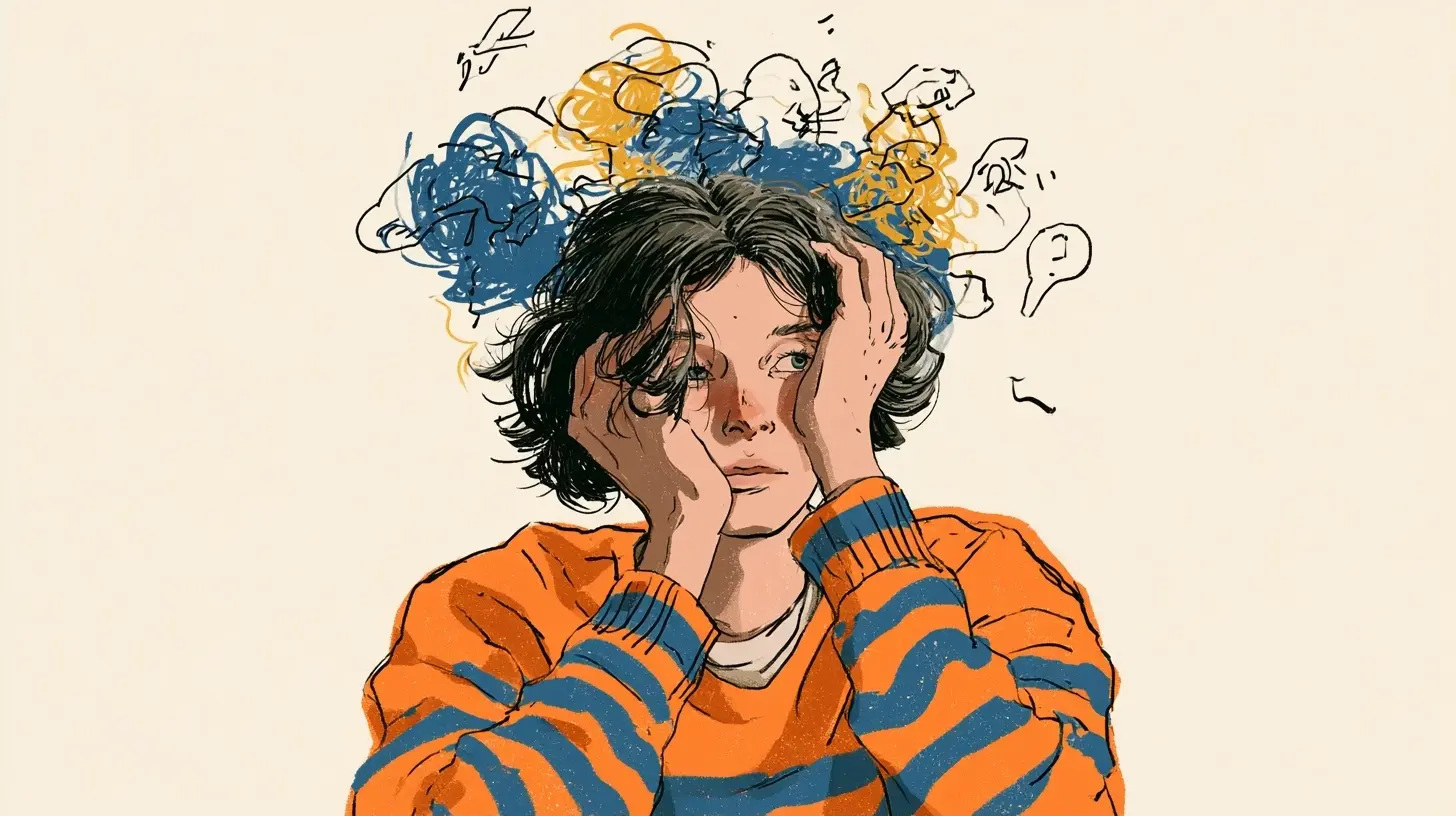
Overwhelm is not a vague emotional state. It is a specific cognitive event. Your brain is being asked to process more input, make more decisions, and hold more items in working memory than its current resources can handle.Working memory is the mental scratchpad where you hold information while you use it. It is small. Famously small. When you exceed its capacity, performance does not degrade gracefully. It collapses. You start forgetting mid-sentence what you were about to say. You reread the same email three times. You walk into a room and stand there like a confused NPC because the reason you came in has vanished.
At the same time, your body is running a stress response. The sympathetic nervous system kicks in, pushing out adrenaline and cortisol. Heart rate rises, breathing gets shallow, muscles tense. This system is brilliant for short bursts of physical danger. It is terrible for sorting through forty emails and a difficult conversation with your manager.
Here is the key insight: acute stress narrows attention. It makes you focus on the perceived threat and ignore everything else. That is useful when the threat is a bus. It is disastrous when the threat is a complex project with twelve moving parts, because the parts you ignore are exactly the ones that will bite you later.
So you end up in a loop. Stress narrows your thinking. Narrowed thinking produces worse decisions. Worse decisions create more problems. More problems create more stress. The loop tightens until you are essentially a very anxious hamster on a very small wheel.
A pause interrupts the loop. That is its core function. It is not about relaxation for its own sake. It is about breaking a physiological and cognitive cycle that cannot break itself.
Why "Just Push Through" Backfires
There is a cultural script that says the right response to overwhelm is more effort. Grit. Discipline. Coffee. And look, there is a time and place for grinding through a dull task. But overwhelm is not a motivation problem, so effort is the wrong tool.When you push through overwhelm, several things happen. First, your prefrontal cortex, the part responsible for planning, impulse control, and complex reasoning, gets partially sidelined by the stress response. You are literally trying to do your most demanding mental work with your least capable mental equipment. The result is predictable: you make fast, shallow decisions and then spend days cleaning up the mess.
Second, you burn through your attentional resources faster. Attention is finite. Sustained focus depletes it, and stress accelerates the depletion. Pushing through means running the tank to empty and then continuing on fumes, which is how you end up staring at a spreadsheet at 11 p.m. feeling busy but accomplishing nothing.
Third, and this is the part people miss, pushing through teaches your nervous system that overwhelm is a state to be endured rather than addressed. Over time, that pattern wears you down. Chronic stress is not a badge of honor. It is a slow withdrawal from your own cognitive bank account, and the interest rate is brutal.
The alternative is not to collapse on the couch and give up. It is to pause deliberately, briefly, and with intention. Which brings us to what a pause actually does.

The Physiology of Stopping: What Happens When You Pause
When you stop and take a few slow breaths, you activate the parasympathetic nervous system, the branch responsible for rest and recovery. This is not mystical. Slow breathing, particularly with a longer exhale than inhale, stimulates the vagus nerve and nudges your body out of fight-or-flight mode. Heart rate slows. Muscles loosen. Blood flow shifts back toward the parts of the brain involved in reasoning and reflection.This shift matters because the stress response and the reflective brain are somewhat antagonistic. You cannot fully access calm, considered thinking while your body believes it is under attack. The pause does not eliminate the stressor. It changes your state so you can respond to the stressor competently.
There is also a cognitive effect. When you stop directing attention at a problem, your brain keeps working on it in the background. This is sometimes called the incubation effect. You have experienced it: you struggle with a problem for an hour, give up, take a shower, and the solution arrives uninvited. The shower did not solve the problem. It gave your brain the space to finish work it had already started.
A pause also creates what psychologists call a response window. Between a stimulus and your reaction, there is a gap. Under stress, that gap shrinks to almost nothing, which is why you snap at people or send emails you regret. A deliberate pause widens the gap. You get to choose your response instead of being run by your reflexes.
And there is a simpler benefit: pausing lets you notice what is actually happening. Overwhelm is often a fog. You feel terrible but you cannot say why. Thirty seconds of stillness can turn a vague sense of doom into a concrete observation: "I am overwhelmed because I have three deadlines this week and I have not eaten lunch." That observation is actionable. The fog is not.

What a Pause Is Not
Before going further, let me clear up some common misconceptions, because pausing is easy to do badly.A pause is not avoidance. Avoidance is when you stop because you do not want to face something. A pause is when you stop so you can face something more effectively. The difference is intention and duration. A five-minute walk to reset your head is a pause. A five-day Netflix binge that ends with you feeling worse is avoidance wearing a pause costume.
A pause is not meditation, necessarily. Meditation is a structured practice with its own benefits, but you do not need a cushion or an app to pause. You need to stop and let your system settle. Some people do that best in silence. Others do it by staring out a window. Both count.
A pause is not a cure for a broken situation. If you are overwhelmed because your workload is genuinely unsustainable, pausing will help you think clearly, but it will not fix the workload. You still have to make the hard decisions about boundaries, delegation, or leaving. The pause is a tool for making those decisions well, not a substitute for making them.
And a pause is not weakness. This one deserves emphasis because so many people believe the opposite. Stopping when you are overloaded is what a well-calibrated system does. It is what a good pilot does when the warning lights come on. Ignoring the warning lights is not strength. It is how planes crash.
How Long Should a Pause Be?
There is no universal number, but there are useful ranges.A micro-pause is ten to sixty seconds. One or two slow breaths before you reply to a tense message. A moment of stillness before you open the next task. These are the cheapest interventions available and the most underused. They do not require leaving your desk or telling anyone. They just require remembering to do them.
A short pause is five to fifteen minutes. A walk around the block. Sitting somewhere quiet without your phone. Making tea and actually paying attention to making tea. This is long enough to shift your physiological state and short enough to fit into most days.
A longer pause is an hour or more. This is where real recovery happens, and it is where most people hesitate, because it feels like a lot to give up. But an hour of genuine rest often produces better work than an hour of pushing through fog. The trade-off is real, and you should evaluate it honestly: sometimes a deadline genuinely requires grinding. But grinding past the point of diminishing returns is not heroic. It is inefficient.
A practical rule: pause before the point of collapse, not after. The earlier you interrupt the stress loop, the less time you need to recover. People who pause at the first signs of overwhelm need five minutes. People who wait until they are fried need a day. The math favors early intervention.
Practical Pauses That Actually Work
Here are several approaches, with honest notes on when each one helps and when it does not.The physiological sigh
Two short inhales through the nose, then a long exhale through the mouth. Repeat two or three times. This is one of the fastest ways to downshift your nervous system, and it works in almost any setting. It is excellent for acute spikes, like right before a difficult conversation. It is not a substitute for addressing the source of chronic stress, but as a circuit breaker it is remarkably effective.The sensory reset
Step away from screens and engage a different sense. Look at something far away. Listen to what is actually around you. Wash your hands in cool water. The point is to interrupt the narrow, screen-bound attentional state that overwhelm tends to produce. This works well when you are stuck in a mental loop. It works less well if you use it as an excuse to scroll social media, which is not a reset, it is just a different input stream.The brain dump
Write down everything on your mind, unfiltered, for five minutes. Not a plan. A dump. The act of externalizing the mental list frees working memory and often reveals that the chaos is smaller than it felt. This is especially useful when you cannot identify why you feel overwhelmed. The list usually tells you. Consider it a diagnostic tool, not a to-do list. The to-do list comes after.The walk
Movement changes your physiology and your perspective. A ten-minute walk outside is one of the most reliable resets available. It works because it combines gentle exercise, a change of environment, and often a bit of daylight, all of which support mood and attention. It does not work if you spend the whole walk rehearsing the thing that stressed you out. The point is to let your attention rest, not to ruminate in motion.The deliberate nothing
Sit and do nothing for five minutes. No phone, no music, no podcast. This is the hardest one for most people, which is exactly why it is valuable. Boredom is uncomfortable, but it is also where your brain consolidates and sorts. If you cannot tolerate five minutes of nothing, that is worth noticing. It usually means your baseline arousal is too high, and the pause is not optional.Common Mistakes People Make When Pausing
Even people who believe in pausing often do it in ways that undermine the benefit.The first mistake is pausing with your phone. Scrolling is not rest. It is a high-stimulation activity that keeps your attention captive and often makes you feel worse. If your pause involves a screen, ask yourself whether it is actually a pause or just a different kind of consumption.
The second mistake is pausing with guilt. If you spend your five-minute break telling yourself you should be working, you get the physiological costs of stopping without the cognitive benefits. The guilt keeps the stress response running. A pause only works if you actually let yourself pause, even briefly.
The third mistake is using the pause to plan. Planning is work. It is useful work, but it is not rest. If your break consists of mentally reorganizing your afternoon, you have not paused. You have just changed tasks.
The fourth mistake is waiting for the perfect moment. There is never a convenient time to stop. The work will always be there. The pause has to be taken, not found.
The fifth mistake is treating the pause as the whole solution. If you pause five times a day because your workload is crushing you, the pauses are not the answer. They are a signal that something structural needs to change.
When Pausing Is Not Enough
I want to be direct about this, because it is where a lot of well-meaning advice falls short.Pausing helps you regulate your state. It does not change your circumstances. If you are overwhelmed because you have taken on more than any human could handle, no amount of breathing exercises will fix that. You will just be a calmer person with an impossible workload.
In those cases, the pause is step one. Step two is a clear-eyed look at what is actually on your plate and what has to come off it. That might mean a conversation with your manager about priorities. It might mean saying no to something. It might mean asking for help, which is a skill many high performers have never developed. It might mean accepting that some things will be done less well, or not at all.
There is also a point where overwhelm is not situational but chronic, and where it shades into anxiety or burnout. If you find that pausing does not restore you, if the overwhelm is constant regardless of what is happening, or if you are noticing persistent changes in sleep, mood, or function, that is worth discussing with a professional. A pause is a tool for managing normal stress. It is not a treatment for a clinical condition, and pretending otherwise does not help anyone.
Building the Pause Into Your Day
The people who benefit most from pausing are not the ones who remember to do it in crisis. They are the ones who build it into the structure of their day so it happens automatically.A few ways to do that:
Attach pauses to existing transitions. Before you open your laptop. After you finish a meeting. Before you start a new task. Transitions are natural pause points, and linking the pause to them means you do not have to rely on willpower.
Protect one longer pause per day. Even fifteen minutes. Put it in your calendar if you have to. Treat it as a real commitment, because it is.
Use physical cues. A particular chair. A particular window. A particular mug. Cues make the pause easier to start, and starting is usually the hard part.
Notice your early warning signs. Everyone has them. Tight shoulders. Shallow breathing. A sudden inability to decide what to do next. Learn yours, and treat them as a signal to pause rather than a signal to push harder.
Review honestly. If you find yourself needing to pause constantly, that is data. It is telling you something about your load, your boundaries, or your habits. Listen to it.
The Bottom Line
Overwhelm is a signal, not a verdict. It means your brain and body are being asked to do more than they can currently handle, and the most effective first response is not more effort. It is a deliberate stop.The science here is not exotic. Stress narrows your thinking; a pause widens it. Attention depletes; a pause restores it. Reflexes fire fast; a pause gives you room to choose. None of this requires special equipment or a retreat. It requires the willingness to stop for a moment, even when stopping feels like the last thing you should do.
And that is the paradox worth sitting with. The pause feels unproductive precisely when it is most productive. The people who learn to trust that are not less ambitious. They are just harder to knock over. They recover faster, decide better, and burn out less. Not because they are tougher, but because they know when to stop.
So the next time your shoulders creep up and your inbox starts to look like a threat, try the thing that feels wrong. Stop. Breathe. Give your brain thirty seconds to catch up. Then go back to work, and notice how much more of it you can actually do.
all images in this post were generated using AI tools
Category:
Mental WellbeingAuthor:

Paulina Sanders