The Neuroscience Behind Positive Thinking
22 September 2026
Let me start with a confession. The first time someone told me to "just think positive," I wanted to throw a chair at them. It was the kind of advice that sounds great on a mug and useless in a hospital waiting room. But here is the thing I have come to appreciate after years of studying how the brain actually works: positive thinking is not magic, and it is not a personality trait you either have or lack. It is a set of measurable neurological events. And once you understand those events, the whole concept stops being annoying and starts being genuinely interesting.
So let us dig into what is really happening upstairs when your mind leans toward the bright side, why it matters, and when the whole enterprise turns into a trap.

What Positive Thinking Actually Is (And What It Is Not)
Most people confuse positive thinking with positive feeling. They are not the same thing. A feeling is a transient state, a chemical weather pattern. A thinking style is a habit of interpretation, a default setting your brain uses to make sense of ambiguous input.When a coworker walks past you without saying good morning, your brain has to fill in a gap. It could conclude "she is angry at me," "she is distracted by her own problems," or "she did not see me." That gap-filling is where positive thinking lives. It is not about pretending the coworker is not angry. It is about not defaulting to the most threatening explanation when the evidence is thin.
This distinction matters because the pop-culture version of positive thinking, the one that tells you to chant affirmations in the mirror until reality bends to your will, is not supported by neuroscience. What is supported is something narrower and more practical: the way you habitually interpret events shapes the neural circuitry that interprets future events. That is a real mechanism, and it has real consequences.

The Brain's Negativity Bias: A Feature, Not a Bug
Your brain is not designed to be happy. It is designed to keep you alive, and for most of human history, the biggest threat to your survival was the thing that ate you. So evolution built a system that pays more attention to danger than to delight.This is called negativity bias, and it shows up everywhere. Losses feel roughly twice as painful as equivalent gains feel good. A single rude comment can eclipse ten compliments. You can have a great day and lie awake replaying the one awkward moment.
The amygdala, a small almond-shaped cluster deep in the temporal lobe, is a key player here. It is your threat detector, and it is fast. It can trigger a fear response before your conscious mind has even finished processing what you are looking at. That speed is useful when the threat is a falling rock. It is less useful when the threat is an email from your boss with the subject line "quick chat."
Here is the crucial point: the amygdala does not distinguish well between physical threats and social ones. A harsh email and a snarling dog activate overlapping circuits. Your body responds with cortisol and adrenaline either way. Over time, chronic activation of this system wears you down, impairs memory, disrupts sleep, and makes you more reactive to minor stressors.
Positive thinking, properly understood, is not about silencing the amygdala. It is about giving your prefrontal cortex more say in the conversation.
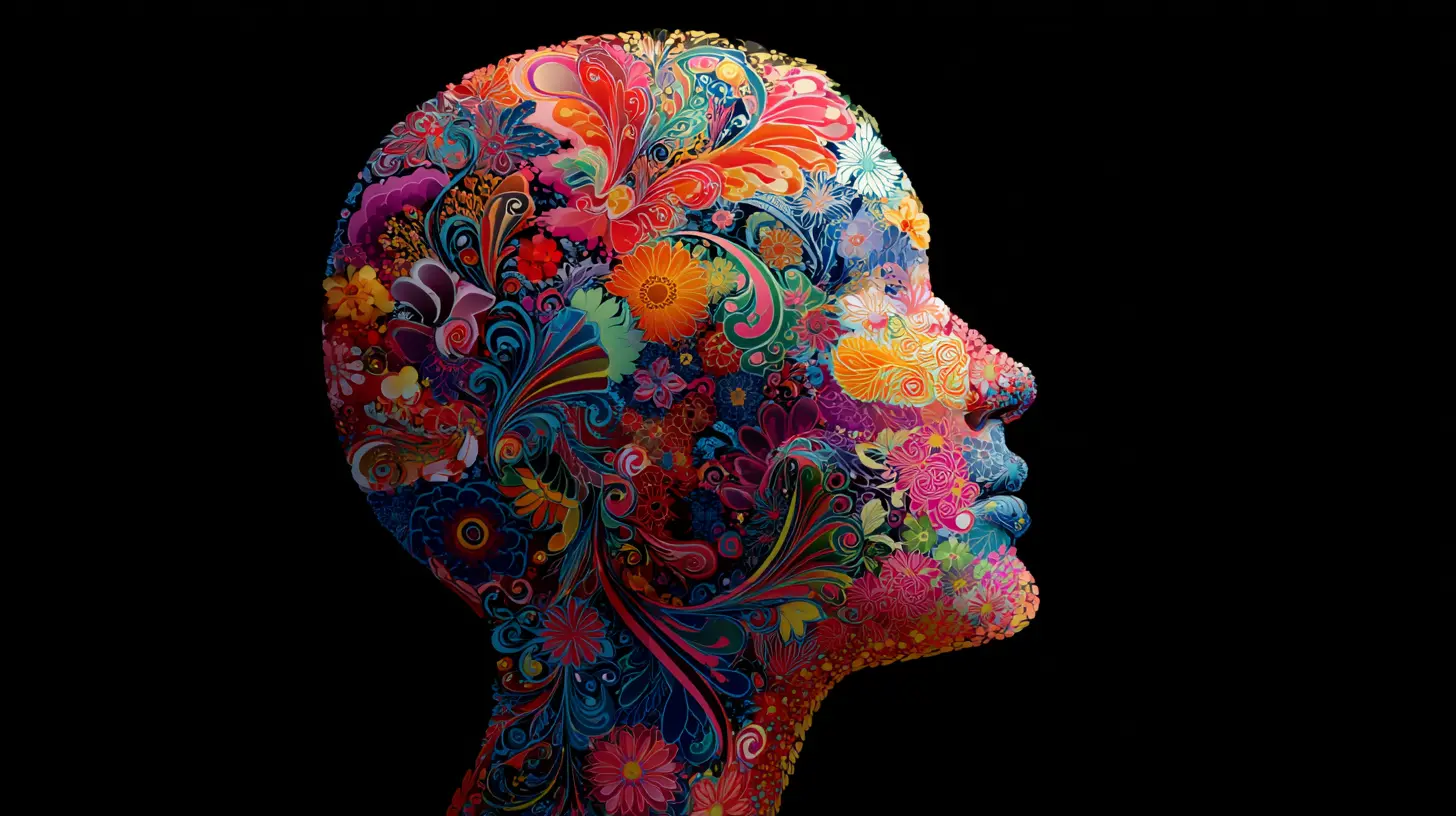
The Prefrontal Cortex: The Adult in the Room
If the amygdala is the smoke detector, the prefrontal cortex is the person who checks whether there is actually a fire. This region, sitting right behind your forehead, handles planning, impulse control, and something called reappraisal. Reappraisal is the fancy term for changing how you interpret a situation to change how it feels.Say you get stuck in traffic. The amygdala says "threat, threat, we are going to be late, everything is ruined." The prefrontal cortex can respond with "this is annoying, but I cannot change it, and I have a podcast queued up." Same traffic. Different physiology.
Neuroimaging work has shown that when people successfully reappraise a negative situation, prefrontal activity goes up and amygdala activity goes down. This is not just a subjective shift. It is a measurable change in how the brain allocates resources.
The catch is that the prefrontal cortex is slow and expensive. It burns a lot of glucose, and it tires easily. That is why reappraisal works better when you are rested and fed, and falls apart when you are exhausted or hungry. If you have ever snapped at someone at 6 p.m. over something that would not have bothered you at 10 a.m., you have experienced prefrontal fatigue firsthand.

Neuroplasticity: Why Practice Actually Changes the Hardware
The reason positive thinking can become a durable trait rather than a temporary mood is neuroplasticity. Neurons that fire together wire together. Every time you practice a particular interpretation, you strengthen the pathway that produces it.This is not metaphorical. London taxi drivers, who memorize the city's labyrinthine streets, show measurable enlargement of the hippocampus, the region involved in spatial memory. Musicians show structural changes in motor and auditory areas. The brain is not a fixed machine. It is more like a garden that keeps rearranging itself based on what you plant.
Apply that to interpretation styles. If you habitually read neutral events as threats, you strengthen the threat-reading circuit. It becomes your default, and it fires faster and more automatically over time. If you habitually read them as manageable challenges, you strengthen that circuit instead.
This is why the "fake it till you make it" advice is half right and half wrong. Faking a feeling does not work. But practicing an interpretation does, because you are literally building the neural pathway that will eventually produce the feeling automatically.
The Chemistry of a Positive Outlook
Several neurotransmitter systems are involved in what we loosely call a positive outlook, and understanding them helps explain why the effects are real but not instantaneous.Dopamine is often called the pleasure molecule, but that is a simplification. It is more accurately a motivation and anticipation molecule. It surges when you expect a reward, not just when you get one. This is why looking forward to something can feel almost as good as the thing itself. A positive thinking style tends to keep dopamine in a healthy anticipatory range, which supports goal-directed behavior.
Serotonin is associated with mood stability, sleep, and a sense of social safety. Low serotonin activity is linked to rumination and depression, though the relationship is more complicated than the "chemical imbalance" marketing of the 1990s suggested.
Oxytocin, released during social bonding, dampens amygdala reactivity. This is why a genuine conversation with a trusted friend can calm you down faster than any amount of solo self-talk.
Cortisol is the stress hormone. Acute spikes are fine and even useful. Chronic elevation is corrosive. A positive interpretation style does not eliminate cortisol, but it reduces the frequency and duration of unnecessary spikes.
None of this means you can think your way out of a clinical mood disorder. If your serotonin system is genuinely dysregulated, no amount of gratitude journaling will fix it. Biology sets the floor. Thinking style adjusts where you sit above that floor.
Why This Matters More Than You Think
The practical stakes are higher than most people assume. Interpretation style affects:Stress recovery. People who reappraise stressors recover faster, both subjectively and physiologically. Their cortisol returns to baseline sooner.
Immune function. Chronic stress suppresses immune activity. Better stress regulation correlates with better immune outcomes, though the effect sizes are modest and the research is messy.
Cardiovascular health. Pessimism is associated with higher rates of heart disease, even after controlling for other risk factors. The mechanism is probably a combination of stress physiology and health behavior.
Decision making. Anxiety narrows attention and pushes you toward short-term thinking. A calmer prefrontal cortex makes better long-term choices.
Relationships. People who default to charitable interpretations of their partner's behavior report higher relationship satisfaction. This one is almost embarrassingly predictive.
Notice that none of these require you to believe in the law of attraction or visualize a parking space into existence. They are just downstream consequences of how your brain processes ambiguous information.
Common Misconceptions That Wreck the Practice
Let me clear out some underbrush, because a lot of well-meaning advice gets this wrong.Misconception 1: Positive thinking means ignoring problems
This is the fastest way to make things worse. Denial is not optimism. If your car is making a grinding noise, the positive response is not "I am sure it is fine." It is "this is annoying, I will deal with it, and I am capable of handling it." The interpretation is positive. The action is realistic.Misconception 2: You should feel good all the time
Nobody feels good all the time, and people who claim to are usually either lying or selling something. The goal is not constant positivity. It is resilience, which means bouncing back from negative states rather than never entering them.Misconception 3: Affirmations rewire your brain
Repeating "I am a millionaire" while your bank balance says otherwise does not rewire anything except your capacity for self-delusion. Affirmations can work when they are believable and specific. They backfire when they are grandiose and contradicted by obvious reality.Misconception 4: It is just about attitude
Attitude without action is a hobby. Positive thinking is most useful as a support structure for behavior, not a substitute for it.
What Actually Works: Evidence-Informed Practices
Now for the practical part. Here are approaches that have reasonable support, along with honest notes on when they work and when they do not.Cognitive Reappraisal
This is the workhorse. When you notice a negative interpretation, you deliberately generate alternative explanations and evaluate which is most likely.Example: Your friend has not replied to your text in two days. Default interpretation: "She is mad at me." Reappraisal: "She is busy, or her phone died, or she read it and forgot to reply, which she does sometimes." Then you check the evidence. Has she given any actual signal of being upset? If not, the catastrophic interpretation is probably wrong.
This works because it engages the prefrontal cortex and gives it a chance to veto the amygdala's first draft. It works best when you are not already flooded with emotion. If you are in full panic mode, reappraisal is like trying to reason with a car alarm. Calm down first, then reappraise.
Cognitive Reappraisal of Arousal
A close cousin. Instead of trying to calm down before a stressful event, you reinterpret the arousal itself as preparation rather than anxiety. "My heart is racing because I am about to give a presentation" becomes "my heart is racing because my body is getting ready to perform."This is subtle but powerful. The physiological signature of anxiety and excitement is nearly identical. The label you attach changes how you experience it.
Gratitude Practice
Writing down things you are grateful for has decent evidence behind it, particularly for mood and sleep. The mechanism is probably attentional: you are training your brain to notice positive input it would otherwise filter out.The catch is that gratitude journaling becomes stale fast if you write the same three things every night. Specificity helps. "I am grateful for my health" is weak. "I am grateful that my knee did not hurt on my run today" is stronger because it forces you to actually retrieve a memory.
There is also a risk of using gratitude to suppress legitimate negative emotions. If you are grieving or angry about something real, gratitude is not a replacement. It is an addition.
Self-Distancing
When you are upset, refer to yourself by name or as "you" in your internal monologue. "Why are you so worked up about this, [your name]?" This small linguistic shift creates psychological distance and reduces emotional intensity. It sounds ridiculous. It works.Behavioral Activation
Sometimes the fastest way to change your thinking is to change your behavior. If you are stuck in a rumination loop, doing something, anything, that requires attention can break it. This is not avoidance if you return to the problem later with a clearer head. It is strategic disengagement.Social Connection
A real conversation with someone who cares about you regulates your nervous system in ways that solo techniques cannot. This is not weakness. It is co-regulation, and humans are built for it.When Positive Thinking Backfires
I would be doing you a disservice if I only sang the praises. There are real situations where forcing positivity causes harm.Grief and trauma. Telling someone to look on the bright side after a loss is not just unhelpful. It is cruel. Grief needs to be felt, not reframed. The research on this is clear: emotional avoidance prolongs suffering.
Genuine injustice. If you are being mistreated at work, the problem is not your attitude. It is the mistreatment. Positive thinking can become a way of tolerating unacceptable conditions.
Clinical depression and anxiety. These are not thinking problems. They are medical conditions that may require therapy, medication, or both. Positive thinking is a supplement, not a treatment.
Toxic positivity. This is the cultural pressure to be upbeat regardless of circumstances. It shuts down honest conversation and makes people feel ashamed of normal human emotions. If you find yourself performing happiness for other people's comfort, you have crossed into toxic territory.
The rule of thumb: positive thinking is a tool for interpreting ambiguity. It is not a tool for denying reality.
How to Build the Habit Without Burning Out
A few practical notes from watching people try this and fail.Start small. Pick one recurring situation where you tend to default to catastrophe. Practice reappraisal there. Do not try to overhaul your entire worldview in a weekend.
Expect it to feel fake at first. It will. That is normal. The goal is not to feel genuine immediately. The goal is to build the pathway. Genuineness follows repetition.
Track it. A simple note on your phone when you successfully reframe something. Over weeks, you will see patterns. You will also see that the technique works better in some contexts than others.
Do not do it when you are flooded. Reappraisal is a prefrontal task. When your amygdala is in full alarm, the prefrontal cortex is offline. Calm your body first, then reframe.
Get sleep. Sleep deprivation impairs prefrontal function and amplifies amygdala reactivity. No amount of cognitive technique compensates for chronic sleep loss. This is not a motivational issue. It is plumbing.
Watch for the self-blame trap. If you fail to reframe something, do not interpret that as a personal failure. That is just negativity bias wearing a productivity costume.
A Balanced Verdict
Positive thinking, stripped of its self-help packaging, is a set of cognitive skills for managing how you interpret ambiguous events. It works through identifiable mechanisms: prefrontal regulation of the amygdala, neuroplastic reshaping of habitual pathways, and downstream effects on stress physiology. It is real, it is trainable, and it is useful.It is also not a cure for everything. It cannot fix a bad job, a broken relationship, or a chemical imbalance. It cannot replace grief work, medical treatment, or honest conversation. Used well, it is a resilience tool. Used badly, it becomes denial with a smile.
The most useful framing I have found is this: you cannot control what happens to you, but you have more influence over how you interpret it than most people realize. That influence is not infinite. It is not magic. But it is real, and it is worth developing.
And if someone tells you to just think positive while you are in the middle of a genuine crisis, you are still allowed to want to throw a chair. Some advice deserves a chair.
all images in this post were generated using AI tools
Category:
Mental WellbeingAuthor:

Paulina Sanders