Does the Body Keep the Score, or Does the Brain Predict It?
June 19, 2026 - 13:16

For years, the popular idea in trauma therapy has been that the body keeps the score. The phrase, made famous by Bessel van der Kolk, suggests that traumatic experiences get locked into the flesh, stored in muscles and nerves, waiting to be released. But a growing number of neuroscientists are pushing back. They argue that the body does not hold memories at all. Instead, the brain is constantly making predictions about what the body needs to survive, and trauma simply corrupts those predictions.
This newer model, called predictive processing, flips the old story on its head. It says the brain does not passively record events like a video camera. It actively guesses what is coming next based on past experience. When you have been through something terrible, your brain learns to expect danger even in safe situations. That racing heart or tight chest is not a stored memory. It is a prediction error. The brain misreads the present moment as a threat and sends the body into fight or flight.
This shift matters for treatment. If trauma is locked in the body, the solution might be somatic therapies, yoga, or tapping. But if trauma is a broken prediction machine, the fix might be more about rewiring how the brain anticipates the future. Some researchers argue that talk therapy, cognitive reframing, and even simple exposure to safe environments can retrain the brain to make better guesses.
The debate is not just academic. It changes how people understand their own suffering. If you believe your body is holding onto trauma, you might feel like a victim of your own biology. If you believe your brain is just making a bad guess, you might feel more agency to change the pattern. Neither view is fully proven, but the conversation is moving away from the idea of a body that remembers and toward a brain that predicts, sometimes poorly, long after the danger has passed.
MORE NEWS

September 17, 2026 - 04:15
Five Greater Latrobe students recognized as September Wildcats of the MonthFive students from the Greater Latrobe School District received recognition during the September school board meeting on Tuesday. The district named them Wildcats of the Month, a program designed...

September 16, 2026 - 03:15
Study Links Close Social Duties to Cultural DifferencesDo you think that a person who reorganizes their life so that their aging parents can live with them would be likely to push another out of the way on the subway? What about greeting strangers with...
September 15, 2026 - 13:02
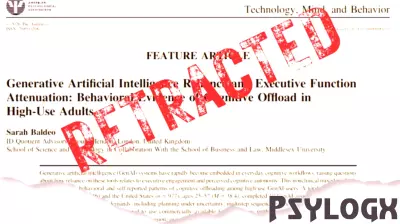
CEO of AI company loses paper on cognitive impact of generative AIA psychology journal has retracted a paper examining how generative AI use affects confidence in work tasks after its sole author declined to share data with the editors. The paper, published in...

September 14, 2026 - 23:23
Clinical Psychologist and Mental Health Advocate Kelly N. Moore Dies at 46Kelly N. Moore, a widely respected clinical psychologist whose work reshaped how institutions approach trauma care and mental health services, died Thursday, Aug. 20, at Virtua Voorhees Hospital....