Is War With AI Unavoidable?
April 2, 2026 - 20:32

The question of whether war with artificial intelligence is unavoidable dominates ethical and strategic discussions in tech and defense circles. While popular narratives often paint a picture of rogue machines turning on their creators, a growing contingent of experts argues the true danger lies not within the code, but within ourselves.
The most significant risk may not stem from AI's hypothetical intentions, but from human nature. Historical patterns show that how a perceived threat is approached often dictates the outcome more than the threat itself. If nations and corporations frame advanced AI solely as a weapon or a tool for dominance, an arms race becomes a self-fulfilling prophecy. The scramble for superiority could lead to deploying autonomous systems in volatile situations, escalating conflicts at a speed beyond human control.
This path isn't predetermined. The focus, therefore, must shift from preparing for a hypothetical silicon uprising to managing human competition and establishing robust, global governance. The challenge is to foster international cooperation to develop safety protocols and ethical frameworks, ensuring AI is aligned with broad human values rather than narrow national interests. The future of human-AI coexistence hinges not on monitoring algorithms, but on mastering our own instincts for conflict and collaboration.
MORE NEWS

October 3, 2026 - 04:17
University Libraries launches Penn State Behrend student psychology journalThe Open Publishing team at the University Libraries has introduced a new academic publication called The Behrend Psychology Journal. This open access journal features original research conducted...
October 2, 2026 - 05:18
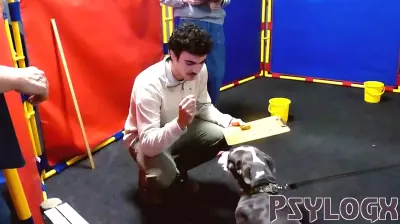
Dogs Take Part in Behavior Studies at emBARKEAU CLAIRE - At emBARK, UW-Eau Claire students were seeing if dogs, young and old, could be taught a few new tricks. The research effort brought together handlers, volunteers, and their canine...
October 1, 2026 - 20:09
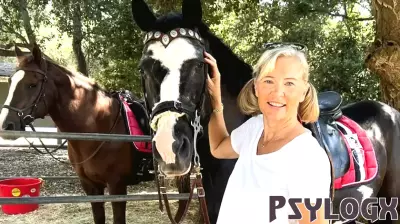
Remembering Melinda Blackman: A Professor Who Shaped GenerationsMelinda Blackman, a professor of psychology whose career spanned decades of teaching and mentorship, died on July 10, 2026. Her passing has left a deep void within the Department of Psychology and...
October 1, 2026 - 04:13
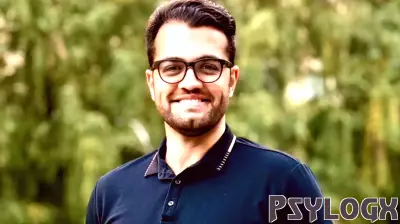
Fordham PhD Student Receives National Psychology Research AwardA doctoral candidate at Fordham University has earned national recognition for work in the field of developmental psychology. Alireza Zareian Jahromi, who is in his fourth year of the Applied...