Study Links Close Social Duties to Cultural Differences
September 16, 2026 - 03:15

Do you think that a person who reorganizes their life so that their aging parents can live with them would be likely to push another out of the way on the subway? What about greeting strangers with a smile? The answers to these questions are at the heart of a puzzle social psychologists have been debating for 30 years: how to best understand differences between cultures.
A new line of research suggests that the duties people carry inside close social relationships may explain why cultures differ in how they treat strangers and acquaintances. In many societies, strong obligations to family and long time friends shape daily behavior. These duties can encourage warmth toward people inside one's circle while producing more guarded or distant conduct toward those outside it.
The finding challenges the common idea that some cultures are simply friendlier or more polite than others. Instead, the researchers argue, people weigh competing responsibilities. When close relationships demand time, money and care, the energy left for casual encounters may shrink. That does not mean strangers are disliked. It means priorities are ordered differently.
Psychologists say the debate has often relied on broad labels such as individualist and collectivist. The newer approach looks at specific relationship duties and how they vary across communities. This could help explain mixed results in earlier studies, where the same culture appeared warm in one setting and cold in another.
The work also raises practical questions for cities with growing older populations. If more adults take on caregiving at home, patterns of public sociability may shift. Researchers plan to test the idea in more countries and to track how obligations change over time. For now, the puzzle remains open, but the focus on close relationships offers a clearer path forward.
MORE NEWS
September 15, 2026 - 13:02
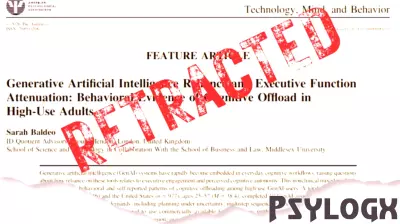
CEO of AI company loses paper on cognitive impact of generative AIA psychology journal has retracted a paper examining how generative AI use affects confidence in work tasks after its sole author declined to share data with the editors. The paper, published in...

September 14, 2026 - 23:23
Clinical Psychologist and Mental Health Advocate Kelly N. Moore Dies at 46Kelly N. Moore, a widely respected clinical psychologist whose work reshaped how institutions approach trauma care and mental health services, died Thursday, Aug. 20, at Virtua Voorhees Hospital....

September 14, 2026 - 03:32
Rethinking Wealth: Behavioral Lessons from The Psychology of MoneyMorgan Housel`s The Psychology of Money emphasises the role of behaviour in financial decisions. It also highlights that intelligence alone doesn`t ensure financial success. The book argues that...

September 13, 2026 - 01:39
Why Some People Turn to Siblings Instead of Parents for SupportSibling relationships are distinctive because they are built around a shared past, familiarity and a relatively equal footing. Brothers and sisters often grow up experiencing many of the same...