The psychology behind Eliot Cutler’s repeated arrests
February 18, 2026 - 08:54

Eliot Cutler, the disgraced former gubernatorial candidate convicted of possessing child pornography, made a stark admission to police during his most recent arrest. He stated he "has had this problem for 65 years," framing his actions within the context of a long-standing personal struggle.
This claim touches on a contentious debate within the mental health community. Many scholars and clinicians express significant doubt about the classification of "porn addiction" as a legitimate medical diagnosis. It is not recognized as a disorder in the Diagnostic and Statistical Manual of Mental Disorders (DSM-5), the standard classification used by professionals. Experts caution that the addiction label can be misleading, potentially pathologizing normal behavior or, more seriously, being used to excuse criminal acts like those Cutler committed.
The core issue, psychologists note, lies in compulsive behavior and the profound harm inflicted on victims. Legal and forensic experts emphasize that the focus must remain on accountability for choices that exploit children, regardless of how an individual rationalizes their conduct. Cutler’s statement provides a window into his personal narrative, but the judicial system treats his actions as serious crimes, not symptoms of an unverified addiction. His case continues to raise difficult questions about motivation, pathology, and justice.
MORE NEWS

October 3, 2026 - 04:17
University Libraries launches Penn State Behrend student psychology journalThe Open Publishing team at the University Libraries has introduced a new academic publication called The Behrend Psychology Journal. This open access journal features original research conducted...
October 2, 2026 - 05:18
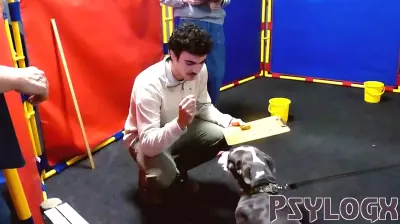
Dogs Take Part in Behavior Studies at emBARKEAU CLAIRE - At emBARK, UW-Eau Claire students were seeing if dogs, young and old, could be taught a few new tricks. The research effort brought together handlers, volunteers, and their canine...
October 1, 2026 - 20:09
Remembering Melinda Blackman: A Professor Who Shaped GenerationsMelinda Blackman, a professor of psychology whose career spanned decades of teaching and mentorship, died on July 10, 2026. Her passing has left a deep void within the Department of Psychology and...

October 1, 2026 - 04:13
Fordham PhD Student Receives National Psychology Research AwardA doctoral candidate at Fordham University has earned national recognition for work in the field of developmental psychology. Alireza Zareian Jahromi, who is in his fourth year of the Applied...